
Why Machine Maintenance Services Can Make or Break Your Operations
Machine maintenance services are scheduled and responsive programs that keep industrial equipment running safely, accurately, and at full capacity.
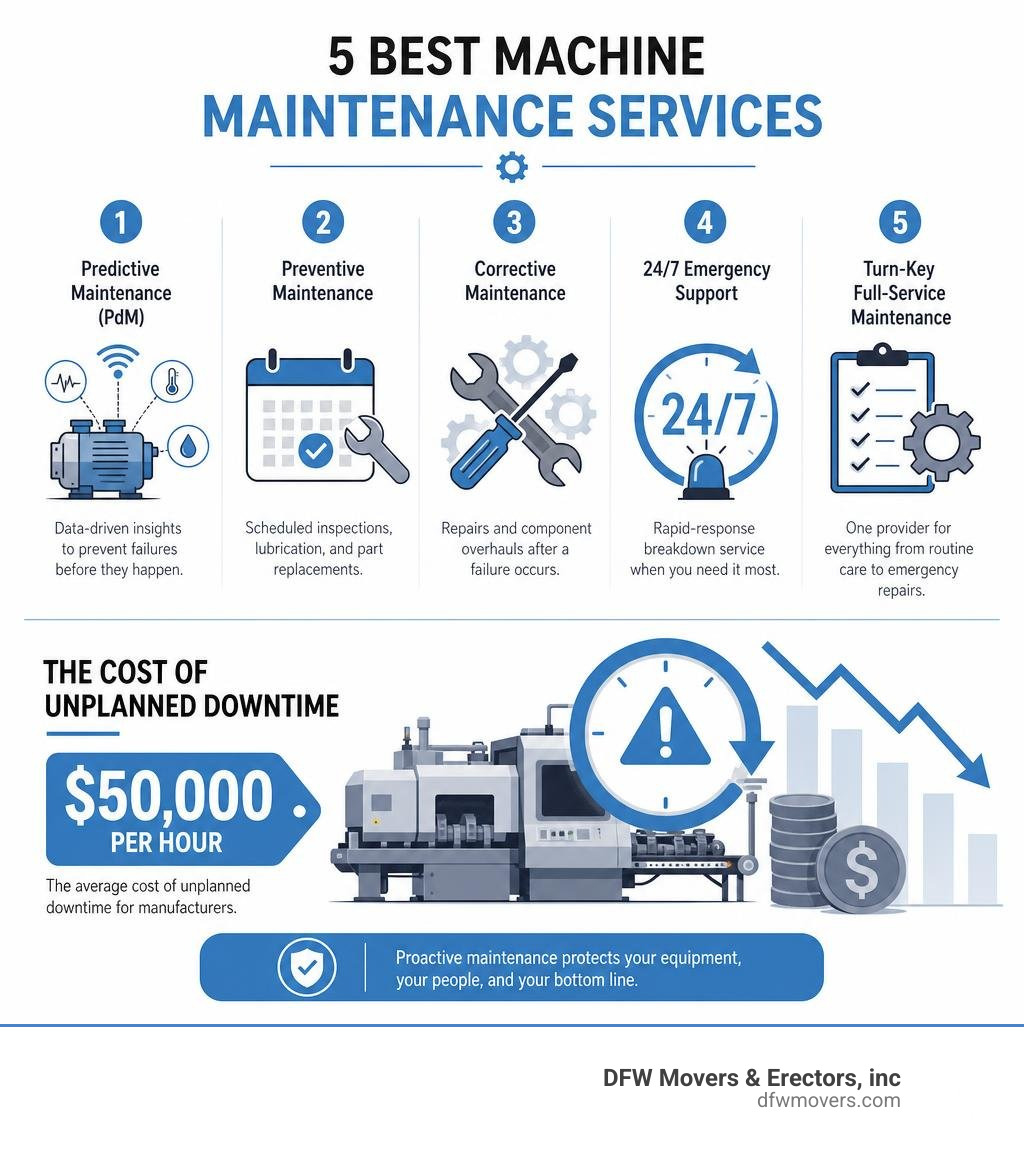
Here’s a quick breakdown of the five best types:
- Predictive Maintenance (PdM) – Uses real-time data (vibration, heat, oil analysis) to catch problems before they cause failures
- Preventive Maintenance – Scheduled inspections, lubrication, and part replacements on a fixed calendar
- Corrective Maintenance – Reactive repairs and component overhauls after a failure occurs
- 24/7 Emergency Support – Rapid-response breakdown service with remote diagnostics and fast on-site dispatch
- Turn-Key Full-Service Maintenance – A single provider handles everything from routine care to emergency repairs
Every operations manager knows the feeling: a machine goes down mid-shift, and suddenly the clock is running against you.
That feeling is expensive. Unplanned downtime costs manufacturers an average of $50,000 per hour. And in most cases, those shutdowns were preventable.
The difference between a facility that hums along and one that lurches from crisis to crisis usually comes down to one thing — the quality of its maintenance program. Whether you’re managing a single production line or coordinating equipment across multiple sites, choosing the right maintenance approach directly affects your uptime, your safety record, and your bottom line.
This guide covers the five best machine maintenance services available in 2026, what separates good providers from great ones, and how to match the right service to your operation.
What are Machine Maintenance Services?
At its core, machine maintenance services represent a structured approach to keeping your physical assets in peak working condition. This isn’t just about calling a technician when a gear snaps; it is a comprehensive discipline that spans the entire lifecycle of your machinery.

When you partner with a professional service provider, their scope of work typically goes far beyond simple repairs. It begins with routine, systematic inspections to identify early signs of wear and tear. From there, technicians utilize advanced diagnostics to troubleshoot complex electrical, hydraulic, and mechanical issues before they escalate.
A complete service program includes:
- Routine Inspections: Checking fluid levels, belt tension, and structural integrity.
- Complex Troubleshooting: Utilizing advanced diagnostic tools to trace electrical faults or hydraulic pressure drops.
- Component Replacement: Swapping out seals, bearings, filters, and valves before they fail.
- System Calibration: Aligning servo motors, adjusting CNC parameters, and squaring machine geometry.
Understanding the deep relationship between machinery care and plant productivity is essential. If you want to dive deeper into how these elements connect, read our detailed breakdown on Industrial Machine Repair and Maintenance.
Importance of Regular Maintenance
Why invest in a structured maintenance program? Because running your machines to failure is one of the most expensive business models you can choose.
First, let’s talk about equipment lifespan. Industrial machinery is a massive capital investment. Regular care—such as proper lubrication, cleaning, and minor adjustments—can extend your equipment’s operational lifespan by 30% to 50%.
Second, regular maintenance directly impacts productivity. When machines are calibrated correctly, they run faster, consume less energy, and produce fewer scrap parts. You aren’t just preventing breakdowns; you are optimizing your daily output.
Finally, there is safety and compliance. A neglected machine is a hazard. Malfunctioning safety switches, worn hydraulic hoses prone to bursting, and misaligned components put your workforce at risk. Regular safety audits and preventive maintenance ensure your facility meets strict Occupational Safety and Health Administration (OSHA) and industry-specific safety standards, protecting your team and reducing your total cost of ownership.
Commonly Serviced Industrial Equipment
Industrial facilities are complex ecosystems filled with specialized machinery. A high-quality maintenance provider must possess the technical expertise to service a wide variety of equipment. Some of the most commonly serviced industrial machines include:
- CNC Machinery: Machining centers, lathes, milling machines, and routers require precise mechanical calibration, servo tuning, and regular geometric alignment.
- Metal Fabrication Equipment: Press brakes, shears, plate rollers, and robotic welding systems require hydraulic system overhauls and structural inspections.
- Heavy Industrial Equipment: Stamping presses, industrial gearboxes, and heavy cranes demand specialized structural welding and heavy-duty mechanical repairs.
- Material Handling Systems: Automated conveyor lines, sorting systems, and heavy forklifts require electrical troubleshooting and regular drive-chain maintenance.
Whether your facility relies on high-speed CNC machines in Austin, TX, or massive stamping presses in Houston, TX, keeping these assets serviced is vital to your operational survival.
The 5 Best Machine Maintenance Services for 2026
As we navigate the industrial landscape of July 2026, the technology driving our factories has become more interconnected, precise, and complex. To keep up, maintenance strategies have evolved. No single approach fits every situation; instead, modern facilities deploy a combination of services to achieve maximum operational efficiency.
To help you visualize how these services compare, here is a quick overview of the five primary maintenance service types:
| Maintenance Service Type | Approach | Best Used For | Primary Benefit |
|---|---|---|---|
| 1. Predictive Maintenance (PdM) | Data-driven (real-time condition monitoring) | Critical rotating machinery, high-value assets | Catches failures weeks in advance; slashes unplanned downtime by 50% |
| 2. Preventive Maintenance (PM) | Schedule-driven (calendar or run-hours) | All plant assets, wear-and-tear components | Reduces breakdowns by up to 70%; highly predictable budgeting |
| 3. Corrective Maintenance | Event-driven (repairing identified faults) | Non-critical machinery, post-diagnostic repairs | Restores degraded assets to original specifications; root-cause resolution |
| 4. 24/7 Emergency Support | Crisis-driven (rapid-response breakdown) | Unexpected failures on primary production lines | Minimizes costly downtime during catastrophic failures |
| 5. Turn-Key Full-Service | Partnership-driven (complete outsourced care) | Facilities looking to consolidate vendors and scale | Streamlines management, reduces overhead, and delivers massive cost savings |
1. Predictive Maintenance (PdM)
Predictive Maintenance (PdM) represents the cutting edge of modern industrial care. Instead of guessing when a part might fail based on a calendar, predictive maintenance uses real-time diagnostic data to monitor the actual health of your machinery.
Top-tier providers deploy several non-destructive testing technologies to peer inside your machines while they are running:
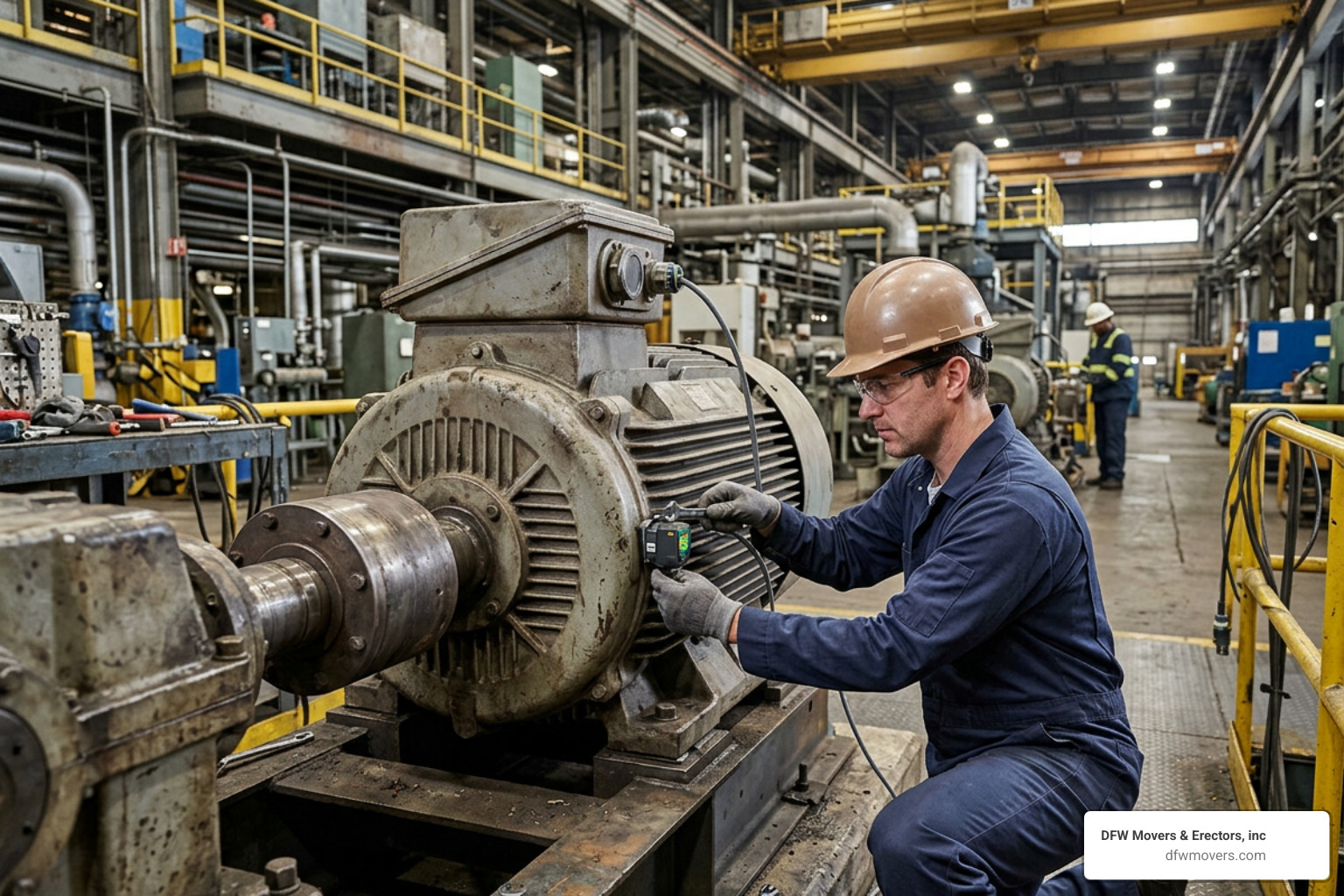
- Vibration Analysis: By placing sensors on bearings, motors, and gearboxes, technicians can detect tiny imbalances, misalignments, or bearing wear long before they cause physical damage.
- Infrared Thermography: Thermal imaging reveals electrical hotspots in control panels, loose connections, and friction-induced heat in mechanical couplings without shutting down the system.
- Oil Sampling and Analysis: Regularly testing hydraulic and gearbox oils acts like a blood test for your machine, revealing microscopic metal shavings, moisture contamination, and chemical degradation.
The results speak for themselves. Implementing a predictive maintenance program can reduce unplanned downtime by 50% and cut overall maintenance costs by 10% to 40%. By knowing exactly when a component is going to fail, you can order the replacement part, schedule the repair during a planned shift change, and completely avoid a catastrophic breakdown.
2. Implementing Preventive Machine Maintenance Services
While predictive maintenance relies on high-tech sensors, preventive machine maintenance services form the reliable backbone of any successful plant. This strategy is built on a structured, scheduled cadence—usually quarterly or bi-annually—designed to keep machines running within their original design parameters.
A typical preventive maintenance visit from a certified technician includes:
- Systematic Lubrication: Applying the exact manufacturer-specified grease or oil to linear guides, ball screws, and bearings to prevent friction damage.
- Calibration and Tuning: Checking and adjusting the level, squareness, and geometric alignment of machine axes.
- Electrical & Pneumatic Audits: Inspecting electrical panels for proper grounding, cleaning filters, checking for air leaks, and replacing worn hydraulic fittings.
- Wear Parts Replacement: Proactively swapping out known wear-and-tear components like belts, wipers, and seals before they degrade.
By committing to a regular, scheduled PM program, manufacturers can reduce overall equipment breakdowns by up to 70%. It transforms your maintenance budget from an unpredictable, chaotic emergency fund into a highly manageable, scheduled operational expense.
3. Corrective Maintenance and Repairs
No matter how robust your preventive programs are, mechanical components will eventually wear out. When a fault is identified during an inspection, or when a machine begins producing parts outside of acceptable tolerances, corrective maintenance is required.
Corrective maintenance is not just a quick patch; it is a systematic process of troubleshooting, identifying the root cause of the failure, and performing a complete component overhaul. For example, if a CNC machine’s spindle is vibrating, a corrective repair doesn’t just mean tightening the bolts—it involves pulling the spindle, diagnosing bearing wear, checking shaft runout, and rebuilding the assembly to factory specifications.
When your machinery requires professional hands-on restoration, you need experienced technicians who can perform high-precision work on-site. Explore our specialized Machine Repair services to see how we get your critical assets back online.
4. 24/7 Emergency Support and Rapid Response
When a primary production line goes down at 2:00 AM on a Tuesday, you don’t have time to wait for normal business hours. Every minute of delay costs thousands of dollars in lost production, missed shipping deadlines, and idle labor. This is where 24/7 emergency support and rapid response services become your operational lifeline.
Modern emergency services begin long before a technician arrives at your door:
- Immediate Telephone Support: Technical hotlines connect you with experienced engineers who can talk your operators through initial troubleshooting steps.
- Remote Diagnostics: Through secure VPN connections, diagnostic specialists can log directly into your machine’s PLC or CNC controller to read error codes, identify software glitches, and resolve up to 40% of emergency calls remotely.
- Rapid On-Site Dispatch: If a physical repair is required, fully stocked service trucks are dispatched immediately. These mobile workshops carry critical spare parts, diagnostic tools, and specialized rigging equipment to ensure first-visit resolution.
Having a trusted partner with a guaranteed rapid-response protocol is the ultimate insurance policy against catastrophic operational delays.
5. Turn-Key Full-Service Maintenance
For many modern manufacturers, managing multiple maintenance vendors, stocking thousands of spare parts, and hiring scarce technical talent is a massive operational headache. The solution is transitioning to a turn-key, full-service maintenance provider.
Under a turn-key model, a single partner takes complete ownership of your maintenance department. This includes:
- Vendor Consolidation: Eliminating the confusion of coordinating separate contractors for machining, welding, rigging, and electrical work.
- On-Site Technical Staffing: Embedding highly skilled, certified technicians and maintenance managers directly within your facility.
- MRO Asset Management: Organizing and managing your spare parts inventory, ensuring critical components are always on hand without tying up excessive capital.
- Continuous Improvement: Utilizing specialized software (CMMS) to track machine performance, analyze failure trends, and constantly optimize maintenance schedules.
The financial impact of this approach is profound. By consolidating your maintenance needs under a single turn-key partner, you eliminate administrative overhead, improve machine availability, and dramatically lower your total cost of ownership.
Specialized Capabilities of Top-Tier Providers
When selecting a partner for machine maintenance services, it’s important to look beyond basic toolboxes. The best industrial service providers possess highly specialized, in-house technical capabilities that allow them to execute complex, high-precision tasks without relying on slow, expensive subcontractors.
When a complex repair requires moving massive components, leveling heavy structures, or adjusting structural foundations, you need millwrights who understand precision. Our specialized Rigging Millwright Services combine heavy-lifting power with surgical precision to keep your plant perfectly balanced.
Precision Alignment and Metrology
Modern manufacturing tolerances are measured in microns. If a machine tool or conveyor line is out of alignment by even a fraction of a millimeter, it can cause premature bearing failure, excessive tool wear, and high scrap rates.
Top-tier maintenance providers utilize advanced metrology equipment to calibrate your machines:
- 3D Laser Trackers: These devices generate highly accurate 3D spatial measurements, allowing technicians to level and square massive machine beds over long distances.
- Ballbar Circularity Testing: By running a circular test path, a ballbar system measures actual machine movement versus programmed movement, pinpointing mechanical errors, backlash, and servo mismatch.
- Laser Alignment Systems: Used to align rotating shafts on motors, pumps, and compressors, ensuring perfect coupling alignment to prevent vibration and extend seal life.
To understand why precision matters so much for your machinery’s health, check out our guide on the 8 Key Benefits Laser Alignment can bring to your operations. For an even more detailed look at the technology, read Your Complete Guide to Precision 3D Laser Alignment Capabilities.
In-House and Portable Machining
When a critical shaft snaps or a bearing bore wears out, shipping the massive machine component back to the manufacturer for repair can take weeks. Top-tier maintenance providers solve this problem by offering both in-house machine shop capabilities and portable, on-site machining.
With portable boring bars, flange facers, and milling machines, technicians can perform high-precision machining directly on your factory floor. Whether it’s re-machining a worn bearing seat on a stamping press or performing emergency structural welding by AWS-certified welders, on-site machining eliminates disassembly, transport costs, and weeks of waiting.
The ROI of Outsourced Machine Maintenance Services
Investing in professional machine maintenance is not an operational expense—it is a high-return investment. When you partner with a comprehensive service provider, the financial benefits accumulate across your entire operation:
- Increased Machine Hours: Facilities implementing structured maintenance programs report an average 27% increase in machine hours, translating directly into higher manufacturing output.
- Reduced Scrap and Waste: Properly calibrated and aligned machines produce highly consistent parts, reducing material scrap rates by 1% to 3%.
- Lower Spare Parts Costs: Proactive, predictive maintenance allows you to replace individual bearings or seals before they fail and destroy adjacent, high-value gears or shafts.
- Optimized Labor: Instead of your highly paid operators standing idle during unexpected breakdowns, your production schedule remains smooth and predictable.
Selecting the Right Industrial Maintenance Partner
Choosing a maintenance partner is a decision that directly impacts your plant’s future. To ensure you choose a partner who can deliver on their promises, look for the following key indicators:
- Proven Industry Experience: Look for a partner with a long history of serving complex industrial operations. A deep collective pool of maintenance experience is the best guarantee of success.
- Certified Technical Expertise: Ensure their technicians hold relevant certifications (such as ISO certifications, AWS welding credentials, and advanced rigging qualifications).
- Robust Geographic Coverage: Choose a partner with local service hubs near your facilities. If your plants are located across Dallas, Fort Worth, Houston, or San Antonio, having local technicians nearby ensures rapid response times.
- Transparent Pricing: Avoid providers who hide fees or lock you into auto-renewing contracts with complex fine print. Look for clear, upfront pricing and customized service agreements.
Future Trends in Industrial Maintenance
The world of industrial maintenance is moving fast. As we look forward through 2026 and beyond, several key trends are redefining how we care for our machines:
- IoT Integration and Smart Sensors: Affordable, wireless industrial sensors are making real-time vibration and temperature monitoring accessible for almost every machine in the plant, not just high-value assets.
- Balanced Automation: Manufacturers are integrating automated diagnostic systems with human expertise, allowing smart machines to flag their own maintenance needs directly to service providers.
- Sustainability Initiatives: Energy-efficient maintenance—such as precision laser alignment and regular lubrication—is being recognized for its role in reducing a facility’s overall carbon footprint and energy consumption.
- Remote AR Assistance: Technicians on the factory floor are using Augmented Reality (AR) headsets to connect with remote specialized engineers, speeding up complex troubleshooting processes.
Frequently Asked Questions About Industrial Machinery Repair
How often should industrial machine maintenance services be scheduled?
While specific intervals depend on your machine’s age, workload, and environmental conditions, we generally recommend scheduling professional preventive maintenance on a quarterly or bi-annual basis. High-use machines operating in harsh environments (such as dusty or high-heat facilities) may require monthly inspections, while lighter-duty assets can be serviced annually. Always consult your manufacturer’s specifications as a baseline.
What is the difference between preventive and predictive maintenance?
Preventive maintenance is schedule-based. It involves performing routine tasks (like oil changes, filter replacements, and belt adjustments) at fixed calendar intervals or after a set number of operating hours, regardless of the machine’s actual condition.
Predictive maintenance is condition-based. It uses real-time data from vibration sensors, thermal cameras, and oil analysis to monitor the actual health of the machine, allowing you to perform maintenance only when the data indicates a component is beginning to fail.
How does precision laser alignment prevent equipment failure?
When rotating shafts or machine components are misaligned, they create excessive vibration, heat, and mechanical stress. This stress is transferred directly to your bearings, couplings, and seals, causing them to wear out and fail prematurely. Precision laser alignment aligns these components to within microscopic tolerances, eliminating harmful vibrations, reducing energy consumption, and extending the lifespan of your critical wear components.
Conclusion
In the competitive industrial landscape of 2026, keeping your production lines moving is the ultimate key to success. Unplanned downtime is a costly risk that you don’t have to take. By partnering with a professional machine maintenance service provider, you can protect your capital investments, keep your workforce safe, and ensure your operations run at peak efficiency day after day.
At DFW Movers & Erectors, we have spent over four decades helping industrial operations across Texas and beyond manage their heavy machinery. Since 1980, our family-owned business has built a reputation for safe, detail-focused, and highly precise industrial services. From heavy rigging and machinery relocation to precision millwright work, we provide turn-key solutions with completely transparent pricing and no hidden fees.
Whether you need to level a single CNC machine in Fort Worth, TX, relocate an entire production line in San Antonio, TX, or manage a complex industrial project in Houston, TX, our team is ready to deliver.
Ready to optimize your industrial operations? Download our comprehensive resource, The Machinery Moving Playbook for Industrial Operations, to learn how precision planning can transform your next project.
If you’re ready to discuss your machinery maintenance, alignment, or relocation needs, connect with our team of specialists today and put our 45+ years of industrial expertise to work for your business.